

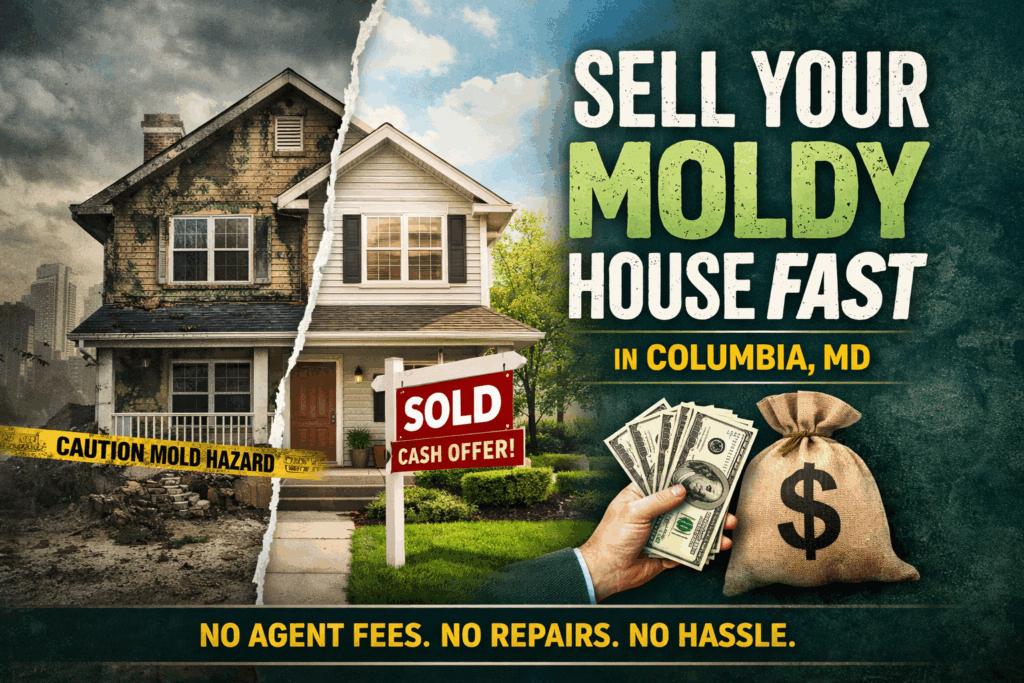
If you own a home in Columbia, Maryland and have discovered mold, you are not alone—and you are not out of options. Many homeowners find themselves overwhelmed once mold appears. Concerns about health, legal disclosures, buyer reactions, repair costs, and long delays often create paralysis. You may be wondering whether you must fix the problem, whether buyers will even consider your home, or whether selling as-is is even legal.
This in-depth guide is designed to answer every question a Columbia homeowner may have about selling a house with mold. We will walk through why mold is common in Howard County homes, what Maryland law requires, how mold affects property value, the real cost of remediation, why traditional sales frequently fall apart, and why many sellers ultimately choose to sell as-is to a local cash buyer. This article is intentionally detailed so you can make a confident, informed decision without pressure.
Table of Contents
- Why Mold Is Common in Columbia, Maryland Homes
- Common Types of Household Mold Found in Columbia
- Health Risks of Living in a Mold-Affected Home
- Maryland Mold Disclosure Laws for Home Sellers
- How Mold Impacts Property Value in Columbia
- The True Cost of Mold Remediation in Columbia, MD
- Why Traditional Home Sales With Mold Often Fail
- How Mold Affects Buyer Financing and Appraisals
- Selling a House With Mold As-Is in Columbia
- Why Many Homeowners Choose to Sell for Cash
- How to Sell Your House Fast in Columbia With Mold
- Frequently Asked Questions About Selling a Moldy House
Why Mold Is Common in Columbia, Maryland Homes
Columbia’s geography, climate, and housing construction all contribute to frequent mold problems. The region experiences high humidity during spring and summer, frequent rainfall, and freeze-thaw cycles that allow moisture to seep into foundations and wall cavities. Many homes in Columbia were built between the 1960s and 1990s, often with basements, crawl spaces, and older drainage systems that are particularly vulnerable to moisture intrusion.
Basements are the most common source of mold complaints. Even without visible flooding, hydrostatic pressure can push moisture through concrete walls. Poorly graded yards, clogged gutters, foundation cracks, and aging sump pump systems make the issue worse. Bathrooms, laundry rooms, attics, and HVAC systems are also frequent trouble areas where condensation builds up unnoticed.
Mold thrives when moisture goes undetected. By the time it becomes visible or smells musty, it has often already spread behind drywall, under flooring, or into insulation—making remediation more complex and expensive.
Common Types of Household Mold Found in Columbia
Not all mold is the same, but buyers tend to treat all mold as a serious concern. The most commonly found molds in Columbia homes include Cladosporium, Aspergillus, Penicillium, and Stachybotrys (often referred to as black mold). While not all mold is toxic, buyers rarely differentiate between species.
From a real estate standpoint, the presence of any mold raises red flags. Inspectors typically recommend professional remediation regardless of type, and buyers often assume the worst. This perception alone can significantly reduce buyer interest, even if the mold itself is relatively mild.
Health Risks of Living in a Mold-Affected Home
Mold exposure can cause a wide range of health symptoms, particularly for children, elderly individuals, and people with asthma or weakened immune systems. Symptoms may include persistent coughing, sinus congestion, headaches, eye irritation, skin rashes, and respiratory infections.
The Centers for Disease Control and Prevention guidance on mold exposure warns that prolonged exposure to indoor mold can aggravate existing respiratory conditions and contribute to chronic health issues. Even when medical risk is low, fear of health consequences strongly influences buyer behavior. Buyers increasingly walk away from properties once mold is disclosed, regardless of severity.
Because of these concerns, mold is considered a material defect in real estate transactions.
Maryland Mold Disclosure Laws for Home Sellers
Maryland does not require sellers to test for mold, but any known mold or moisture problems must be disclosed if they could materially affect the property’s value or safety. This disclosure requirement applies whether you sell with an agent, sell as-is, or sell directly to an investor.
Failing to disclose known mold issues can expose sellers to lawsuits, post-closing disputes, and significant financial liability. Guidance from the Maryland Attorney General’s Office on property disclosures explains that knowingly concealing material defects may be considered misrepresentation.
Disclosure protects buyers—but it also dramatically reduces your buyer pool, which is why many sellers explore alternatives outside the traditional market.
How Mold Impacts Property Value in Columbia
Mold almost always lowers a home’s market value. Buyers factor in not only remediation costs but also inconvenience, risk, and uncertainty. Even when remediation costs are modest, buyers often demand steep discounts to compensate for perceived risk.
According to market analysis from HomeLight on selling homes with mold, properties with disclosed mold issues frequently sell for less and take longer to close than comparable homes without defects. In competitive Columbia neighborhoods, buyers often choose similar homes with fewer complications.
The True Cost of Mold Remediation in Columbia, MD
Mold remediation costs vary widely depending on severity, location, and the source of moisture. Minor surface mold may cost $2,000–$4,000 to remediate. More extensive mold involving insulation, HVAC systems, or structural components can exceed $15,000–$25,000.
Cost breakdowns published by Angi’s mold remediation cost guide show that expenses often increase once contractors identify the moisture source, which may involve roof repairs, plumbing replacement, foundation waterproofing, or HVAC upgrades.
Many homeowners spend thousands on remediation only to discover that they cannot fully recover those costs in the final sale price.
Why Traditional Home Sales With Mold Often Fail
Selling a mold-affected home through a real estate agent introduces multiple points of failure, making the process complex, unpredictable, and often financially burdensome for homeowners. Buyers typically request comprehensive home inspections, which include moisture and mold testing. If mold is discovered, buyers frequently demand professional clearance reports, remediation estimates, or even full remediation before moving forward. Negotiations can become lengthy and contentious, with buyers requesting repair credits, price reductions, or additional guarantees to feel comfortable completing the purchase.
Even after remediation is completed, some buyers remain hesitant due to the potential for recurring mold or hidden moisture issues. This lingering concern can lead to canceled contracts or stalled negotiations, leaving sellers in a prolonged state of uncertainty. Additionally, the real estate agent’s role, while helpful in coordination, can introduce extra layers of communication that slow down the process and increase stress.
Every delay adds up financially. Sellers continue to pay mortgage payments, property taxes, homeowners insurance, utilities, and sometimes homeowners association fees throughout the extended sales period. Any additional remediation costs or unexpected repairs can further strain finances. The combination of prolonged timelines, multiple failed contracts, and high holding costs can make selling through traditional channels both frustrating and risky.
Ultimately, these challenges highlight why many homeowners turn to alternative selling options, such as selling their home as-is to a cash buyer. This approach reduces contingencies, shortens closing times, and provides certainty, allowing homeowners to avoid the pitfalls that often plague traditional sales of mold-affected properties.
How Mold Affects Buyer Financing and Appraisals
Most mortgage lenders require homes to meet minimum habitability standards. Active mold often triggers appraisal conditions or loan denial until remediation is completed. Lenders commonly rely on property condition guidelines similar to those outlined in HUD minimum property standards.
As a result, even motivated buyers may be unable to proceed once mold is identified.
Selling a House With Mold As-Is in Columbia
Selling as-is allows you to sell the home in its current condition without making repairs. While disclosure is still required, you avoid remediation costs, contractor delays, and inspection disputes.
As-is sales typically result in lower offers, but they offer speed, certainty, and reduced stress—advantages that matter greatly to many homeowners.
Why Many Homeowners Choose to Sell for Cash
Cash buyers are not limited by lender requirements and are accustomed to purchasing properties with mold and other defects. They evaluate the home based on renovation potential and factor remediation into the offer.
Many sellers choose to sell their house fast in Columbia by working directly with a reputable local buyer such as Simple Homebuyers, avoiding agent commissions, repairs, and financing delays.
How to Sell Your House Fast in Columbia With Mold
If your priority is speed and certainty, selling as-is for cash is often the most practical option. Cash transactions can close in as little as 7–14 days.
Homeowners dealing with mold also benefit from reviewing detailed statewide guidance on how to sell a house in Maryland with mold, which explains broader legal and financial considerations.
Frequently Asked Questions About Selling a Moldy House
Can I legally sell a house with mold in Columbia, Maryland?
Yes. Mold does not make a property unsellable as long as known issues are disclosed.
Do I have to fix mold before selling?
No. Maryland law does not require remediation prior to sale.
How much does mold remediation cost?
According to Angi’s mold remediation data, costs range from a few thousand dollars to well over $20,000 depending on severity.
Will mold prevent buyers from getting a mortgage?
Often yes. Lenders commonly follow HUD property condition standards, which means unresolved mold can block financing.
Is selling to a cash buyer safe?
Yes, when working with an established local buyer. Cash sales eliminate financing and inspection contingencies.
Final Thoughts
Selling a house with mold in Columbia, Maryland is challenging—but it is absolutely possible. By understanding your legal obligations, the true costs of remediation, and the realities of buyer behavior, you can choose the path that best aligns with your goals. For many homeowners, selling as-is to a trusted local cash buyer offers the fastest, safest, and least stressful solution.
